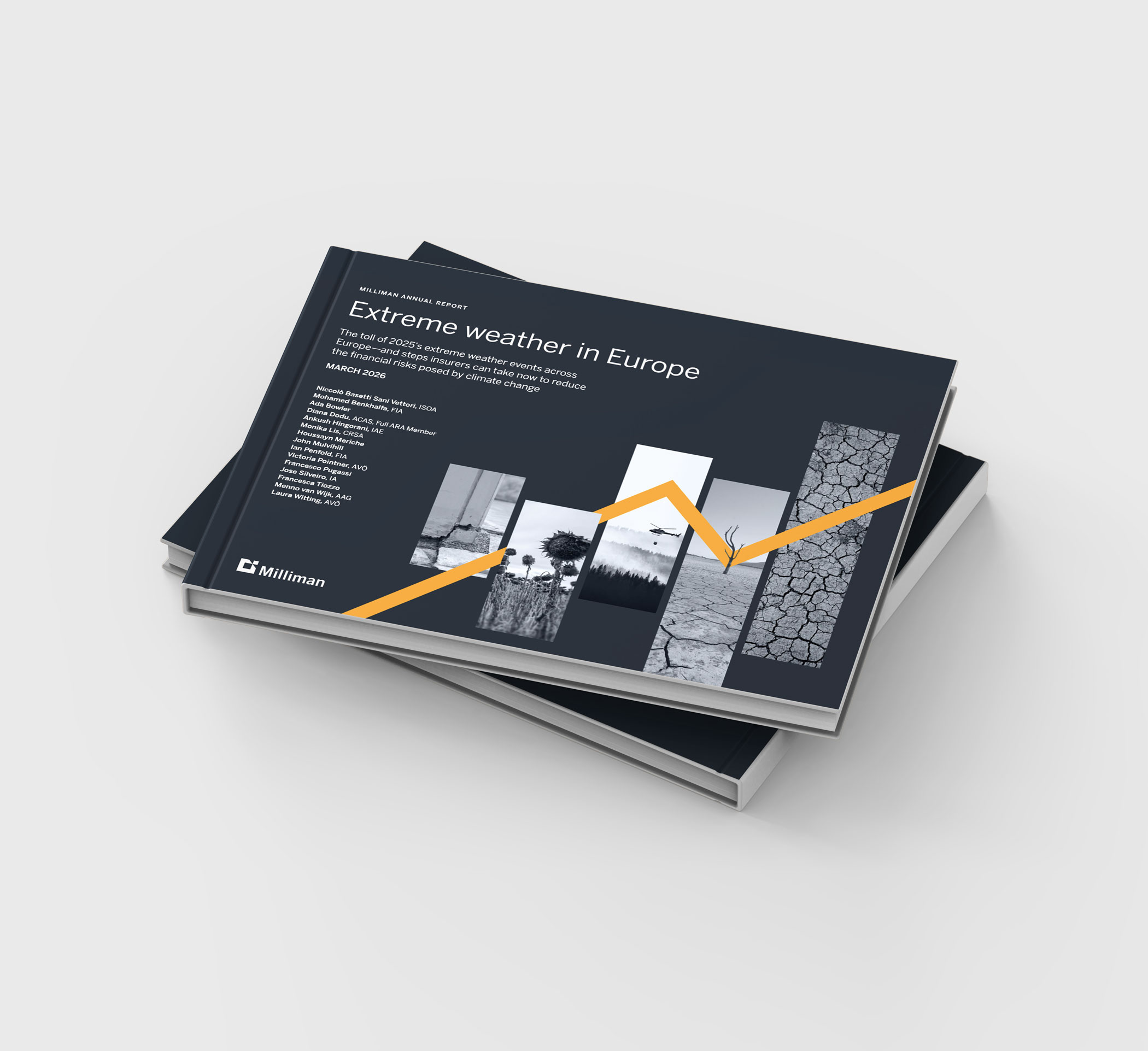
The toll of 2025’s extreme weather events across Europe—and steps insurers can take now to reduce the financial risks posed by climate change
Contents: Executive summary Interactive map Actionable steps Resources Contact
From prolonged drought to intense rain: How did extreme weather affect Europe in 2025?
The year 2025 ranked among the three warmest years ever recorded. Extreme weather events—defined as severe natural catastrophes at extreme ends of historical trends—caused an estimated €43 billion in economic losses across Europe throughout the year.
While 2024 was “The Year of the Flood,” during 2025 European countries experienced a range of perils:
- Heatwaves and drought affected large areas of the continent, particularly the south. But even Belgium and Germany endured above-average temperatures, and the UK recorded its hottest summer ever.
- Extensive wildfires destroyed nearly 700,000 hectares across Portugal and Spain, while France and the Netherlands reported more wildfires than normal.
- Rising subsidence claims—leading to cracks in walls, uneven floors and misaligned doors and windows—were seen in France, the UK and the Netherlands.
- Storms and flash floods caused intense rainfall and river overflow affecting communities and infrastructure in parts of eastern and western Europe, including Poland, Austria, Spain and France.
- Agricultural and infrastructure impacts were widespread and included power outages, crop damage and heat-driven declines in labor productivity, which will likely cause a rise in food prices.
Milliman’s 5th annual “Extreme weather in Europe” report assessed the impact of these and other events on insurers, communities and other stakeholders.
See the interactive map below for a glimpse at how extreme weather affected the 13 countries in our study. And scroll down to learn how insurers can adapt, and how the Milliman Climate Resilience Initiative is helping to address the crisis.
Download the full reportExtreme weather and insurance: The impact across Europe
Explore below to see a snapshot of 2025 extreme weather events in the highlighted countries.
Austria

Belgium

France

Germany

Ireland
Italy

Luxembourg

Netherlands

Poland

Portugal

Romania

Spain

UK

How insurers can help manage the risks posed by climate change
As extreme weather continues to become more frequent across Europe, insurers must adapt, both through internal innovations and by collaborating with governments and policyholders. Many insurers are seeking the help of actuaries and other experts who have knowledge of product design, risk modelling and local European markets.
Key strategies to boost resilience include the following:
Advanced and dynamic risk modelling
Upgraded catastrophe models will be vital to capture the increasing severity and frequency of extreme weather events driven by climate change.
Insurance product innovation
New insurance solutions that can respond to heat, drought and flood-related risks include parametric products, public–private risk-sharing mechanisms and coverage structures that maintain affordability while reducing protection gaps.
Investments in climate mitigation and adaptation
Instead of determining after a disaster how to fund the recovery—when repairs are more expensive—stakeholders must make proactive investments to shore up infrastructure, agriculture and other key sectors.
Cooperation between insurers and government
By strengthening collaboration with national and EU-level authorities, insurers can help support resilient infrastructure investment, climate adaptation strategies and more sustainable insurance frameworks.
Education, transparency and public awareness
Insurers can benefit from expanding communication about climate risks, insurance limitations and adaptation responsibilities to help manage expectations and build policyholder trust in a changing risk landscape.
See more analysis and actionable steps for insurers